
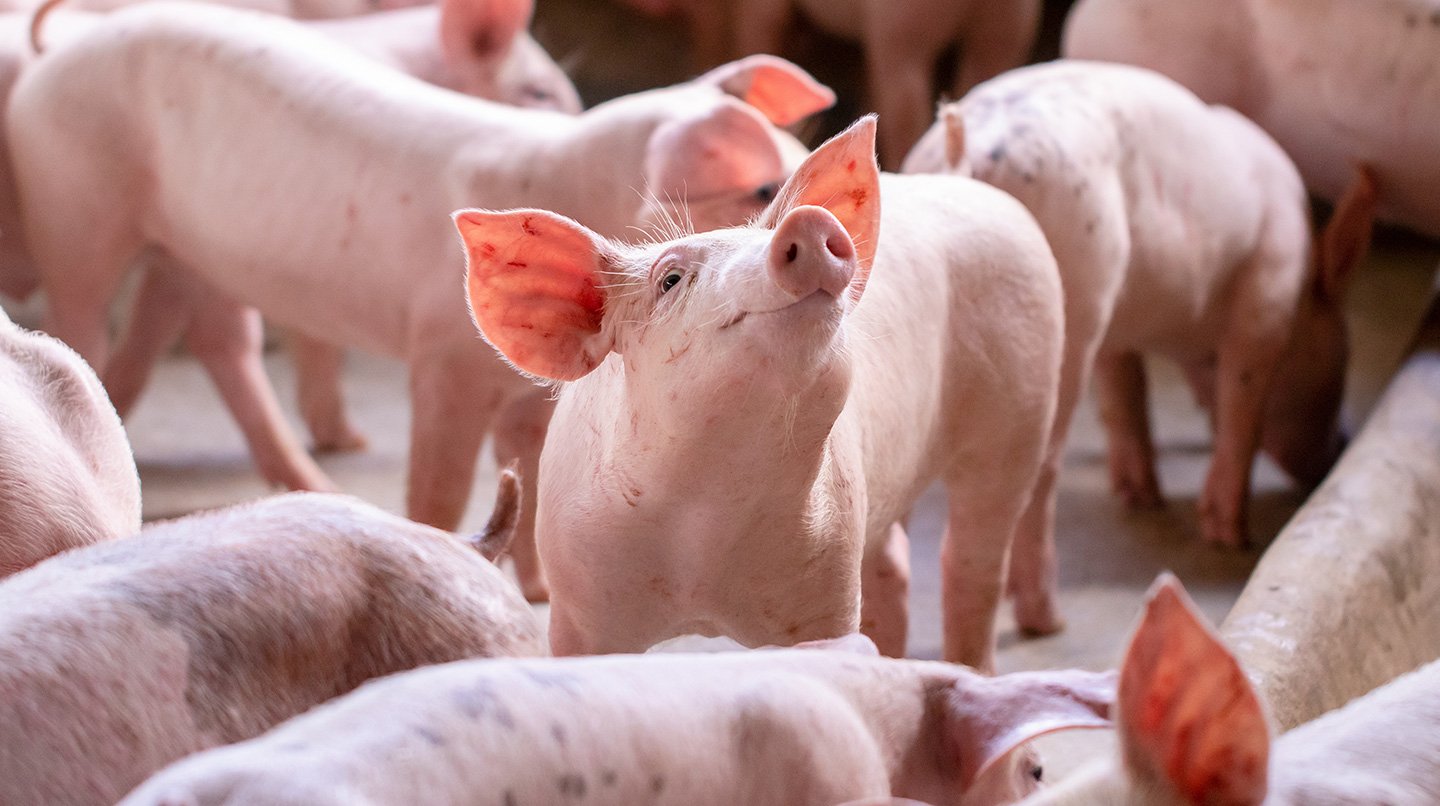
Pig Feeding and Management
For successful pig production the farmer must ensure that all the necessary requirements for pig keeping are met.
The following are the most important areas for consideration.
- Good housing that will allow efficient production of marketable pigs. The
house must be equipped with sufficient feeding and drinking facilities and have adequate space for pigs to exercise and display their natural behaviour. - Good breeding stock (boars, gilts or sows). The quality of the breeding pigs
determines the number and quality of the pigs produced per year hence the profitability of the enterprise. - Good nutrition and proper feeding management. Pig feeds make the biggest proportion of the total cost of pig production and may contribute as high as 70% of the total cost of production. Good pig feeding will ensure the following:
- Good reproduction and growth performance.
- Efficient feed utilization.
- High quality products.
- Good profit for the farmer.
- Proper disease and pest control program. Proper housing, clean dry environmental conditions and other preventive measures will make disease control easier.
- Overall good pig husbandry and collaboration with relevant stakeholders and Government authorities like veterinary /livestock services, National
Environmental Management Authority (NEMA) among others will help make the quality good. - Provision of high standard of Cleanliness/Hygiene: The pigs’ environment must be maintained clean, and dry all the time to protect pigs from disease
infections.
The pen must be spacious to accommodate all the pigs.
Types of Pig Feeds Produced
Empire Pig Starter Meal:
This feed is formulated for young piglets. It is introduced to piglets from day 10 after birth and is fed until they are 2 weeks. It has high crude protein content of 20%. This is a high quality pig feed for piglets and weaners. This feed allows early weaning at 6 weeks. The feed ensures a good start for young pigs. It results in early attainment of slaughter weight in 190-196 days as compared to the common uneconomical period of 240 days. Each pig will consume 39kg of empire pig starter meal.
Empire Pig Growers Meal:
This feed is for growing pigs and is introduced to the pigs at weeks 13 of age and fed until they are 20weeks. The feed is highly palatable and digestible. It has a crude protein of 14%. Each pig consumes 100kgs of Pig Grower.
Empire Sow and Weaner Meal:
This feed is fed to weaners, sows, breeding gilts and breeding boars. It has high crude protein content of 18%.
Empire Pig Finishing Meal:
It is feed for the fatteners. It is introduced at 21st week of age and fed until the pigs attain 90kg live weight at 6 to 7 months. It has a crude protein content of 16%. Each pig will consume 145kg of empire pig finishing meal.
AGE | TYPE OF PIG FEED | FEED/DAY (KG) |
Day 10 to week 12 | Empire pig starter meal. | Introduced at day 10 and given at a rate of 100gm/day. This amount is Increased by 100gm after every week. By the time of weaning at six weeks each piglet will be consuming 0.6kg/day. By the time they are 12 weeks each pig will be consuming 1.0kg/day. Each pig will consume a total of 39 kg for the 12 weeks |
Week 13 to week 20 | Empire pig grower meal | 1.1-1.2kg/day. Increase the daily quantity given to the pig by a 100-200gm per week depending on the growth rate so by the time they are 20weeks they will be consuming between 2.3 to 2.6kg/day. Each pig will consume a total 100kg (from 13-20 week). |
Week 21 to 6-7 months. | Empire pig finishing meal | 2.5kg/day. The quantity is increased as the pig grows by 100gm/week by week 24the pigs will consume 3.0kg/day. Each pig will consume a total of 145kg for this entire period. |
Unique characteristics of Empire pig
- High digestibility
- High palatability
- High nutrient content
Use of Empire pig feeds allows good feed intake and high Feed Conversion Efficiency (FCE) leading to good performance, high growth rate and quick maturity.
Other Important Routine Management Practices
Correction of iron deficiency:
Sow’s milk is very low in iron content. At birth the piglets have about 50mg of iron in their body. Daily requirement of iron by a piglet is about 7mgs/day. The available iron is just enough to run the piglet for about 7-8days.The piglets should be given iron injection at 2nd or 3rd day after birth.
Castration:
Male piglets not needed for breeding should be castrated at the age of 3rd – 4th week. The best method is open surgery. Pigs are also castrated to prevent their meat from boar taint. Castration also makes them more manageable when they reach sexual maturity.
IV. Vaccination
An effective vaccination program should be followed to enhance a successful control of diseases.
Vaccination Programme for Broilers
| Day | Vaccine | Routine |
| Day 7 | Gumboro | Drinking Water |
| Day 14 | Gumboro | Drinking Water |
| Day 21 | New Castle Disease (N.C.D) | Drinking Water |
N/B Always consult the local veterinary office on the local disease prevalence and vaccination regime.
Treatment
A qualified veterinary officer should be called to carry out the diagnosis and advice on the treatment.
Give the birds an antistress/Multivitamin in drinking water after every vaccination, deworming or any treatment.